Subscribe to newsletter
Subscribe & get 10% off on your first order. Receive updates on new arrivals, special offers and our promotions.

Among the most practical ways to do this upgrade is through LED retrofit bulbs—which allow you to keep much of your existing infrastructure while gaining the advantages of modern lighting. In this article, we’ll explore what LED retrofit bulbs are, how they differ from full fixture replacements, their benefits and limitations, best practices for deployment, and how this approach ties into broader lighting strategies for offices, warehouses, and outdoor spaces.
A LED retrofit bulb is essentially an LED-based light source designed to replace traditional lamps (such as incandescent, CFL, or fluorescent) in existing fixtures. Rather than replacing the entire fixture or luminaire, you retrofit the light source (or sometimes add drivers or modules) to harness LED advantages. The retrofit may be “plug-and-play” (requiring minimal changes) or require some rewiring (removing or bypassing ballasts).
The key idea is that you are upgrading the light source while preserving much of the original setup (housing, lens, wiring) to save on cost, labor, and material waste. This approach enables faster returns and simpler installation in many buildings.
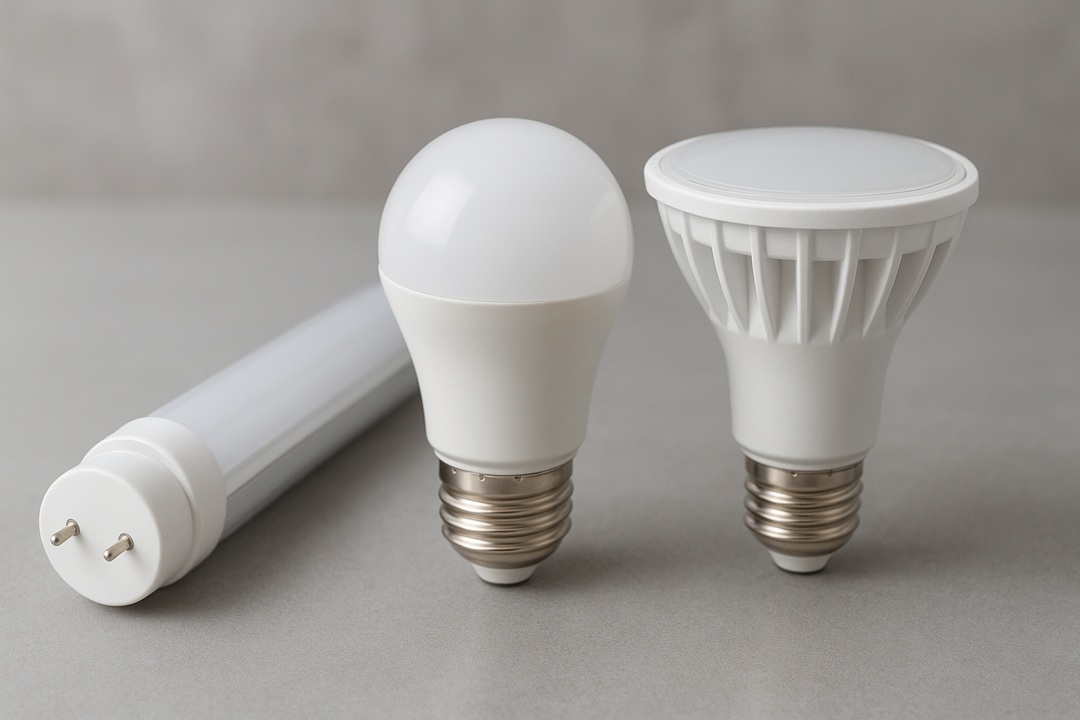
LED retrofit bulbs are available in various form factors—LED tubes (replacing fluorescent tubes), LED “bulbs” for standard sockets, or modules that fit into existing fixtures. They embody the balance between modernization and practicality.
Before diving into retrofits, it helps to compare this approach with full fixture replacement. Many facility managers face a choice: either retrofit existing fixtures with LED modules or replace the entire luminaire with a new LED fixture.
Advantages of LED Retrofit:
Lower upfront cost: You avoid replacing housings, supports, and controls; you only change the light source.
Reduced disruption: Because the fixture stays intact, aesthetics, mounting, and structural elements remain unchanged.
Faster ROI: Lower investment means the payback period shortens.
Sustainability: Less waste in disposing of entire fixtures, more material reuse.
Limitations Compared to New LED Fixtures:
Retrofit options may offer less flexibility in terms of future expandability or advanced features (e.g. precise optics, thermal management).
Depending on existing fixture condition, the housing or lens might constrain LED performance or lifespan.
Some retrofits require bypassing or removing old ballasts, which can complicate installation.
In certain high-stress or harsh environments, a fully new LED unit built for those conditions may outperform retrofitted ones in durability.
In many cases, retrofit is the more cost-effective, practical path—especially when the existing infrastructure is still sound.
When implemented correctly, LED retrofit bulbs deliver a powerful set of advantages. Some of the key benefits include:
Energy Efficiency
LED retrofits typically deliver dramatic reductions in consumption compared to incumbent technologies. Many systems see energy savings of 50–80% or more.
Extended Lifespan & Lower Maintenance
Because LEDs operate for tens of thousands of hours, maintenance costs (replacements, labor) drop significantly over time.
Reduced Heat Output
Traditional lighting wastes much of its energy as heat. LEDs produce much less heat, which helps reduce cooling loads and improves fixture lifespan.
Improved Lighting Quality
Contemporary LED retrofit bulbs provide better color rendering, less flicker, and stable illumination, improving visual comfort and productivity.
Environmental Impact & Sustainability
Switching to LED retrofits helps reduce electricity usage, carbon emissions, and waste—especially since fewer fixtures are discarded.
Faster Payback / ROI
Due to energy and maintenance savings, many retrofit projects pay for themselves in 2–4 years.
Compatibility & Flexibility
Retrofits allow gradual upgrades, blending new LEDs with older systems as budgets allow.
To ensure your retrofit delivers optimal results, follow these practices:
Evaluate Existing Fixtures
Inspect housings, wiring, lenses, thermal conditions. If the fixture is in poor shape, a full replacement might be better.
Choose the Right Type (Plug-and-Play vs Driver Replacement)
Type A (Plug-and-Play): Uses existing ballast; easiest installation.
Type B / “Bypass”: Bypass or remove ballast and provide LED driver instead.
Hybrid or Type C / Driver-based: Replace driver or module separately.
Match Lumen Output & Efficacy
Ensure the retrofit bulb produces sufficient lumens for the space and uses high efficacy (lumens per watt).
Thermal Management Matters
LEDs perform poorly if overheated. Ensure fixture housing provides proper heat dissipation.
Choose Appropriate Color Temperature (CCT) & CRI
Match interior or exterior application needs. For example, 3000–4000K is common indoors, while 5000K may be used outdoors or in high-visibility zones.
Assess Dimming / Control Compatibility
If lighting controls like dimmers or sensors exist, ensure the retrofit is compatible (some older dimmers may not support LED loads).
Ensure Safe Installation & Electrical Code Compliance
Bypass old ballasts properly, ensure wiring is rated for LED current, and follow local codes.
Test in Pilot Areas First
Begin with a test area to confirm brightness, glare, color temperature, and reliability before mass rollout.
Track Performance Over Time
Monitor energy use, lumen maintenance, and maintenance costs to validate ROI.
Implementing LED retrofit bulbs is rarely an isolated decision—it fits into a broader lighting strategy spanning offices, warehouses, and outdoor zones. Here’s how:
In offices, retrofitting existing troffers or panels with LED modules refreshes lighting without disrupting infrastructure. The improved lighting quality boosts productivity and aesthetics.
In warehouses or production zones, retrofitting high bays or linear fixtures can immediately reduce energy costs while preserving existing mechanical support, wiring, and mountings.
Outdoors, many retrofits are performed on streetlights, parking lot luminaires, or floodlights—upgrading just the light engine while keeping the existing pole, structure, or optical housing.
Thus, retrofits serve as a bridge: you preserve core infrastructure while modernizing luminous performance across interior and exterior spaces.
Retrofits allow upgrading light sources without replacing fixtures
Can provide energy savings of 50–80% or more
Long lifespans reduce maintenance and replacement efforts
Lower heat output lessens cooling demands
Improved color rendering and visual comfort
Faster payback on investment
Must consider thermal design, driver compatibility, CCT, efficacy
Begin with pilot installations before full rollout
LED retrofit bulbs represent a smart, pragmatic pathway to modern, energy-efficient lighting. Instead of discarding your existing fixtures, you can upgrade the light source itself—capturing most of the benefits of new LED systems without the cost and disruption of full replacement. When done with attention to thermal design, light output, control compatibility, and pilot testing, retrofits can revolutionize energy consumption, reduce cost, and deliver better lighting across your offices, warehouses, and outdoor spaces.